
Air column packaging arrives flat, inflates near the packing line and wraps a product in a series of connected chambers. That efficiency is attractive, but the pack only works when film, valve, seal geometry, inflation and carton fit behave as one system. A reliable air column packaging manufacturing process starts with the real product and distribution route, not a promise that “more air means more protection.”
1. Map the product and distribution hazards
Share product dimensions, mass, center of gravity, fragile faces, protrusions and acceptable cosmetic contact. Define packing orientation, outer carton, quantity per case, shipping mode and destination climate. A bottle sleeve, corner protector and laptop wrap require different chamber layouts. Clearance must allow inflation without squeezing the product or bulging the carton.
Air columns are one option among several. Our protective packaging material guide helps compare inflatable film, foam and fiber-based structures.
2. Specify the multilayer film
Air column webs commonly combine sealable polyethylene layers with a polyamide contribution for toughness and gas retention, but the exact construction varies. The specification should identify total structure, thickness method, width, haze, color, surface treatment, odor, recycled-content limits and destination-market chemical requirements. “PA/PE” alone does not describe layer ratio, sealing window or mechanical performance.
ISO 527-3:2018, confirmed current in 2024, specifies conditions for determining tensile properties of plastic films and sheets below 1 mm based on ISO 527-1. Tensile data can support material control, but it does not replace seal, puncture or packed-product testing.
3. Inspect rolls and approve the prototype
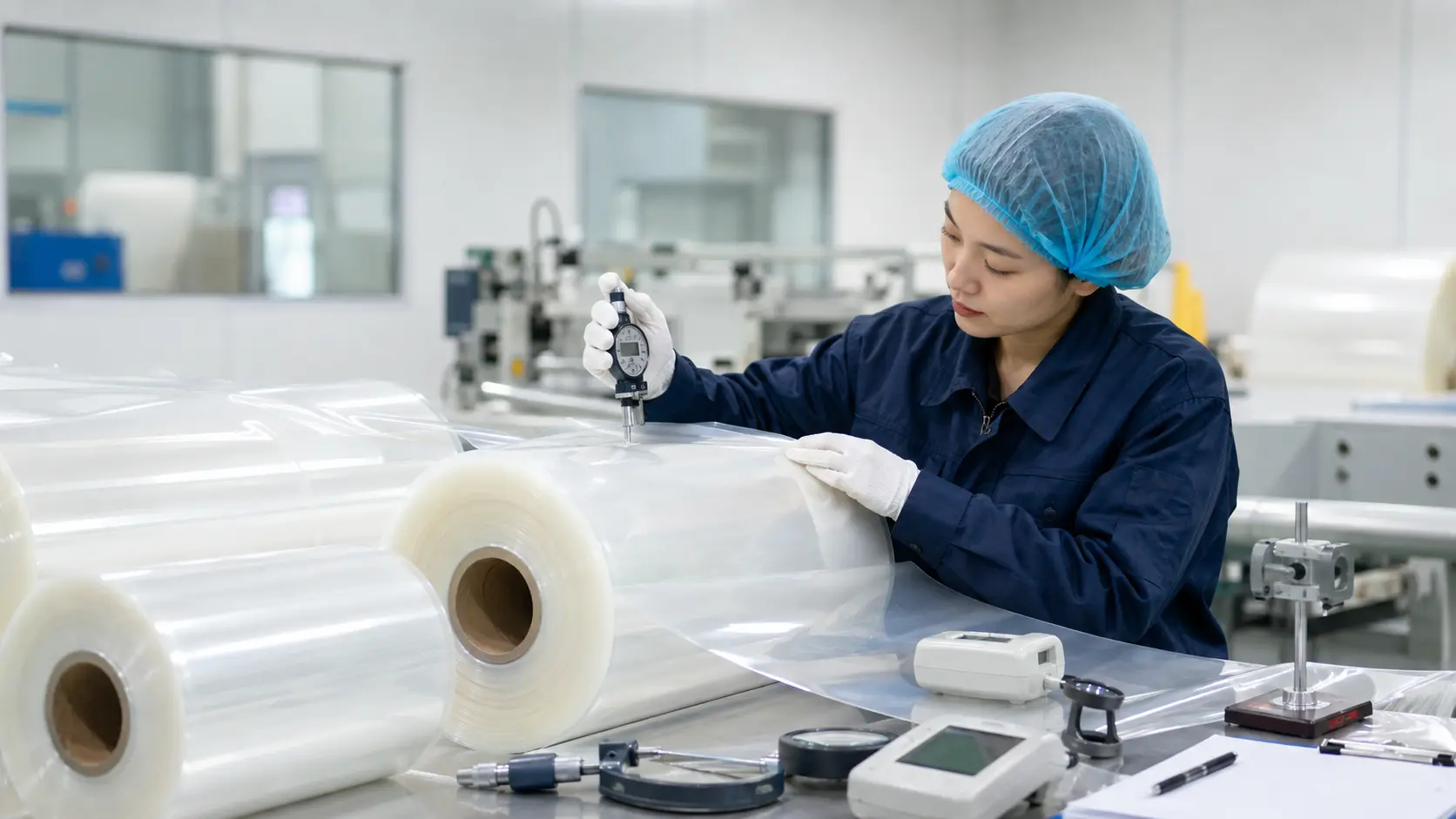
Incoming film rolls are checked for identity, width, thickness consistency, gels, scratches, contamination, blocking and winding defects. A prototype is then made around a production-representative product. Designers adjust chamber width, uninflated dimensions, wrap overlap, access to the inflation port and the way failed adjacent chambers share the load.
4. Print, laminate and integrate the valve
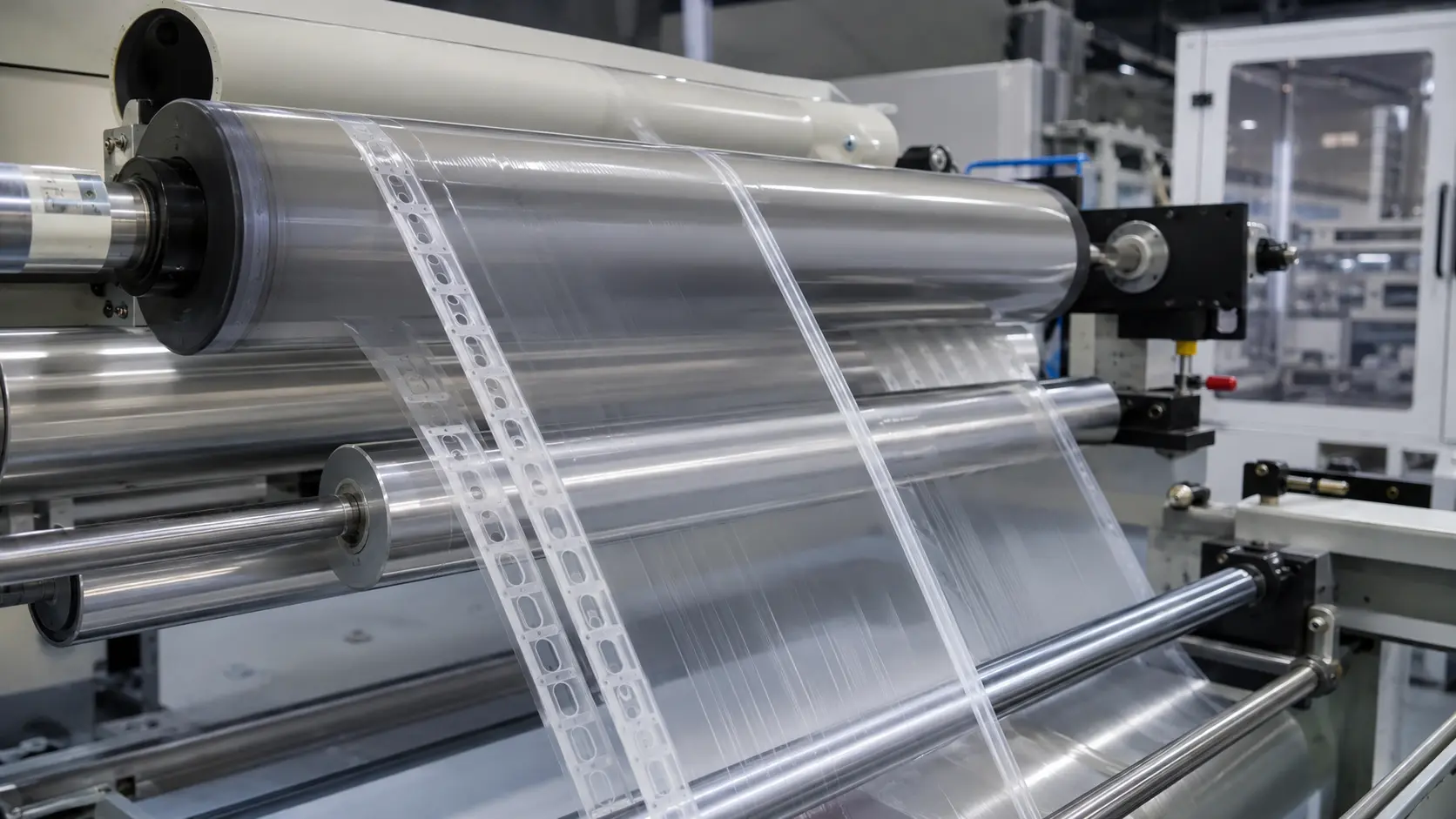
If branding or instructions are required, print position and ink system are approved before converting. Film layers and the one-way valve web are aligned under controlled tension. The valve lets air enter the chamber and is designed to resist reverse flow after inflation. Registration matters: a shifted valve or print may be cut by a seal or become difficult for packers to find.
5. Heat-seal chambers and convert the bag
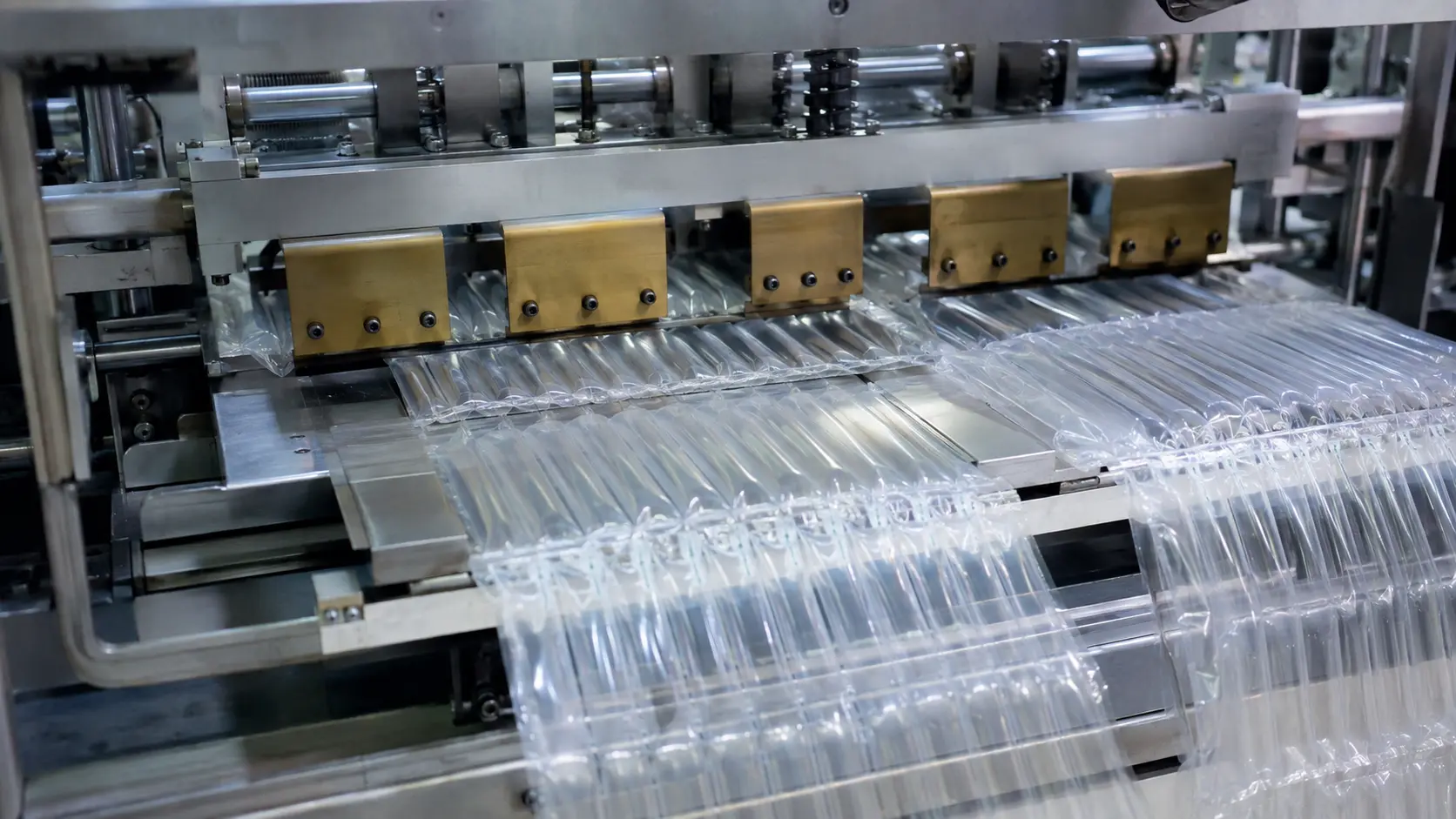
Heated tooling creates longitudinal chamber lines, transverse seals, valve paths and the final outline. Temperature, dwell time, pressure, web speed and cooling must suit the actual laminate. An under-seal may leak; excessive heat can thin, distort or embrittle the film. The web is slit, perforated or cut into individual sleeves, corner pieces or rolls.
6. Inflate and test air retention
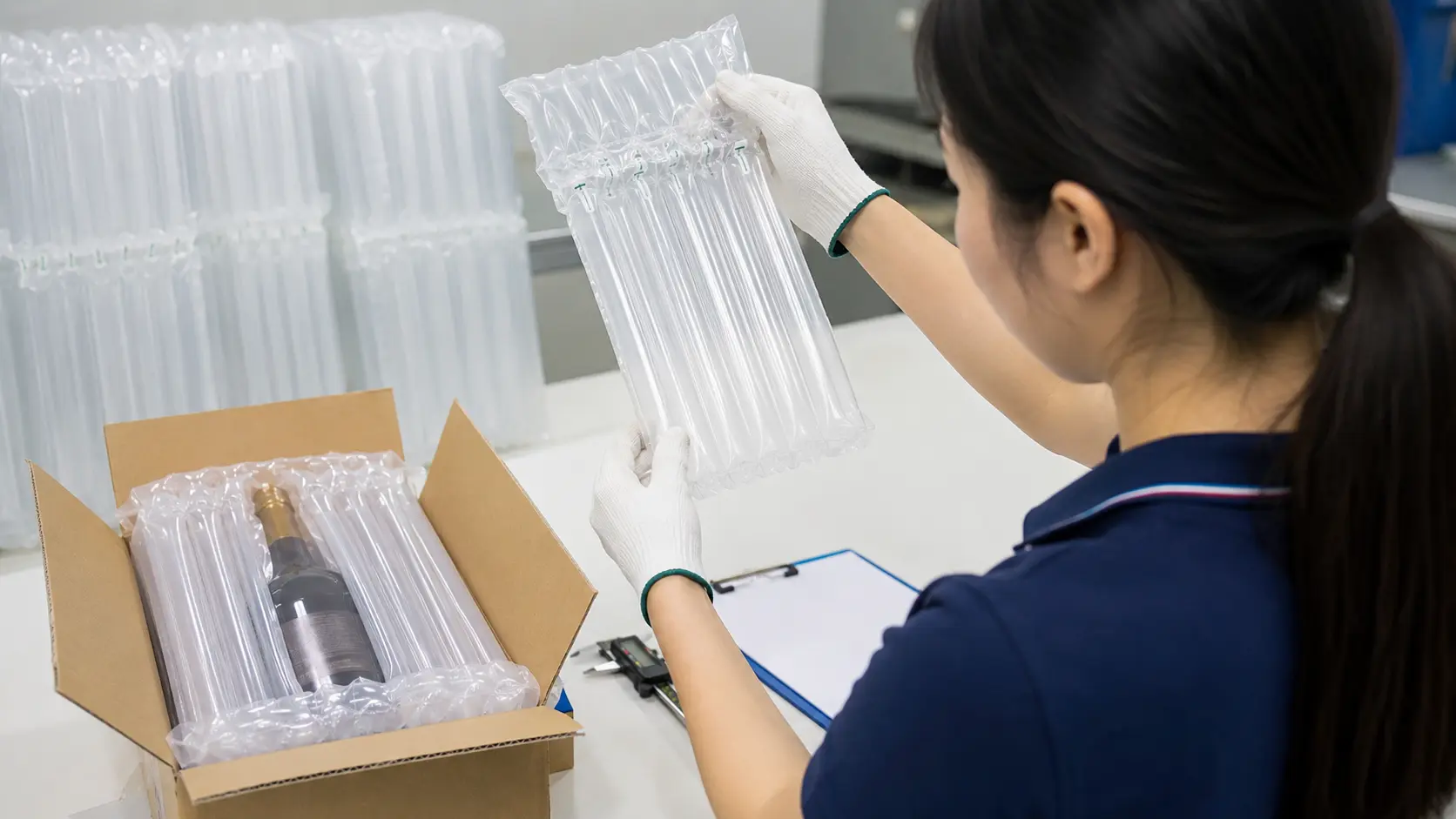
Samples are inflated using defined equipment and settings. Inspectors check valve entry, chamber formation, seal leaks, damaged channels, pressure balance and retention over the agreed observation period. Inflation settings must be validated for the specific design: underinflation reduces support, while overinflation can stress seals, distort fit and enlarge the outer carton.
7. Validate the complete packed product
- Flat and inflated dimensions, chamber and valve position
- Film identity, thickness, clarity and visible defects
- Seal continuity, inflation behavior and air retention
- Product clearance, removal, carton fit and closure
- Packing instructions, quantity and storage protection
Test the product, air columns and carton together. ISTA 3L, for example, addresses hazards in e-commerce fulfillment including vibration, shock, compression, temperature and humidity. The appropriate procedure and acceptance criteria depend on the actual supply chain; selecting a test is not the same as guaranteeing a zero-damage result.
Use an approved production sample and our packaging quality-control checklist. For EU supply, avoid vague “REACH certified” wording. ECHA explains that Candidate List substances in articles, including plastic packaging as an example, can trigger duties for producers, importers and suppliers. Review the current ECHA guidance and define the required declaration for the exact film, ink and adhesive construction.
Conclusion
Reliable air column protection comes from a matched system: product geometry, chamber design, film, valve, seals, inflation and carton. Send product dimensions, weight, photos, outer carton, quantity, destination and distribution route through our sample request page. Approve the inflated pack with the actual product before mass production.
