
Glassine has a distinctive quiet appeal: it is smooth, translucent and lets the product shape show through without the look of a clear plastic film. That appearance can make a small bag feel simple and considered. It can also create unrealistic expectations. Glassine is not automatically waterproof, hermetically sealed or suitable for every greasy food. A dependable glassine paper bags manufacturing process begins by defining the real product and performance requirement.
1. Define the product, bag and closure
Share product dimensions, weight, edges, oil content, moisture sensitivity and filling method. Finished width and height do not equal usable space because side seams, bottom folds and the closure consume material. Decide whether the pack needs an open top, adhesive flap, tuck flap, crimp, label or heat-sealable coating. Test the closure with the actual filling process rather than assuming one style works for every product.
If protection is more important than translucency, compare the structure with alternatives in our protective packaging material guide.
2. Specify the glassine paper precisely
A useful specification identifies grammage, thickness, shade, translucency, smoothness, moisture condition, machine direction and permitted surface treatment. Glassine gains its dense, smooth character through extensive refining and calendering, but performance varies by grade and paper mill. “Glassine” alone is not an acceptance standard.
ISO 536:2019, confirmed current in 2025, specifies a method for determining paper and board grammage. The purchase order should name the test method and tolerance instead of treating a nominal basis weight as a complete material description.
3. Inspect and condition incoming rolls
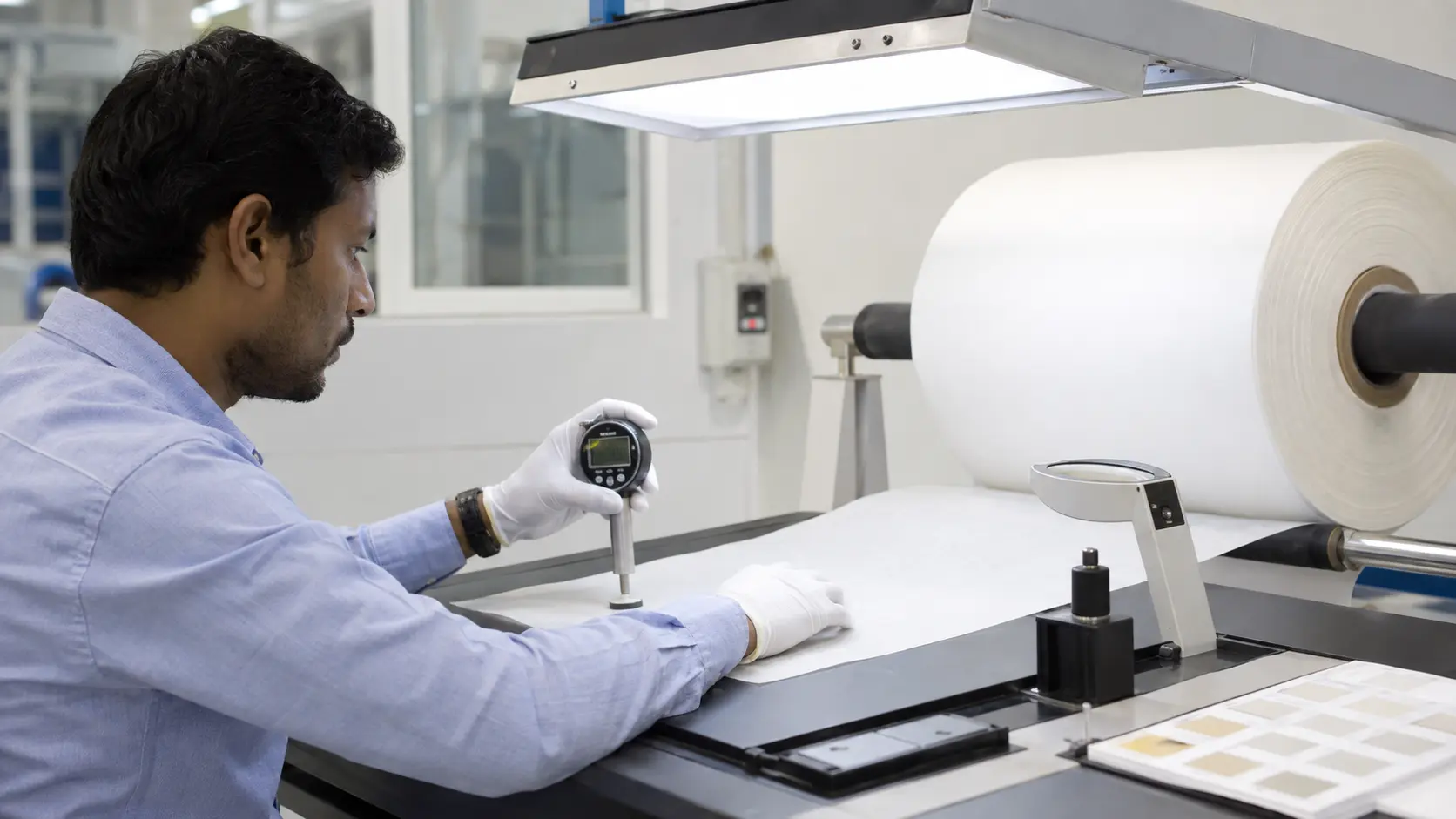
Incoming rolls are checked for identity, width, grammage, caliper, shade, haze, wrinkles, holes, edge damage and contamination. Paper responds to humidity, so rolls should stabilize in a controlled converting environment. Lot changes matter because small differences in smoothness or moisture can affect ink holdout, folding and adhesive behavior.
4. Print with the translucent substrate in mind
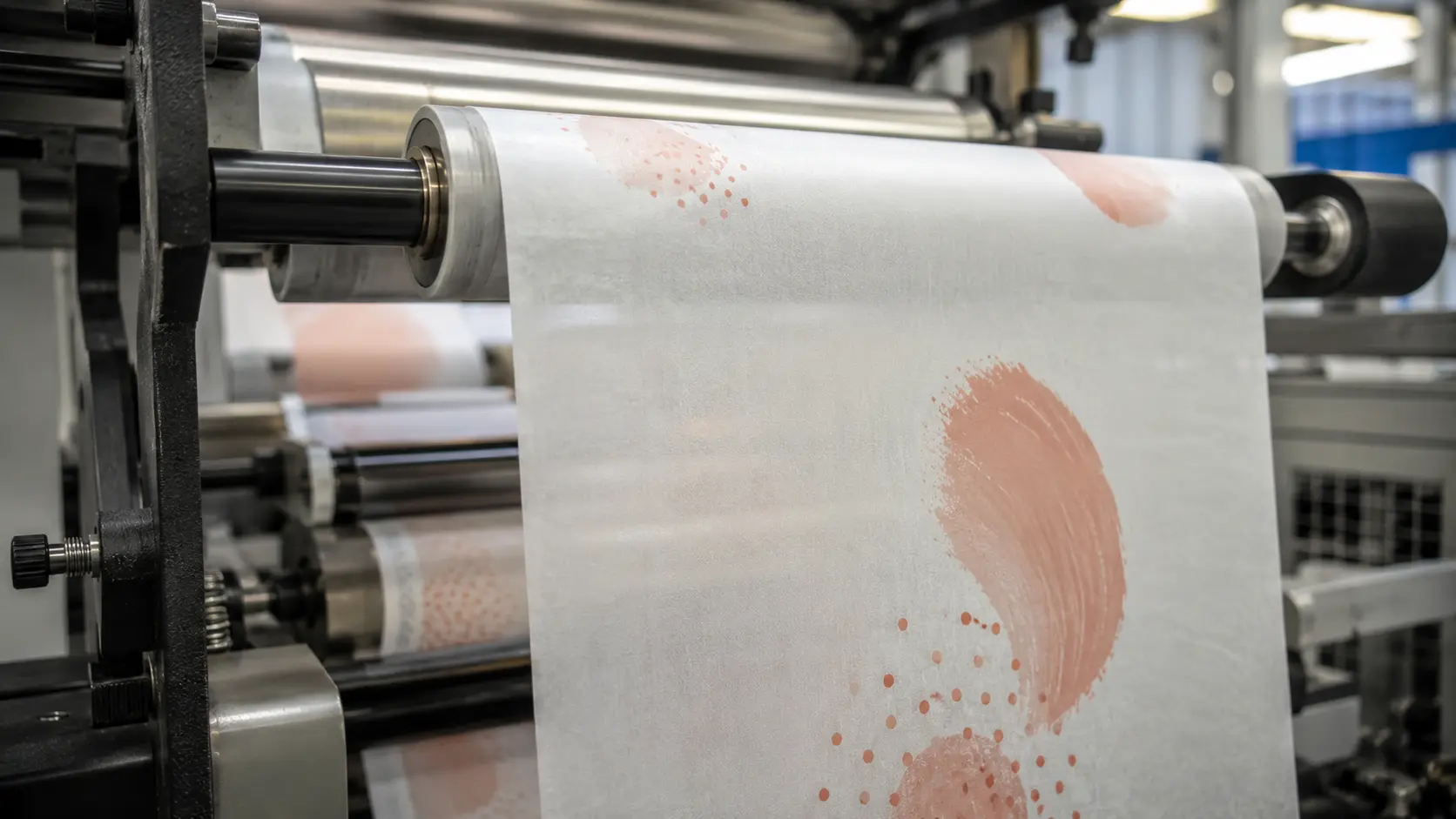
Flexographic printing is common for web production, while other methods may suit short runs or special graphics. Ink appears different on a translucent substrate than on white coated paper. Approve color, opacity, registration, rub resistance and curing on the production glassine. Heavy ink coverage can reduce the subtle translucent effect and may influence folding or odor.
5. Fold, glue and form the bag
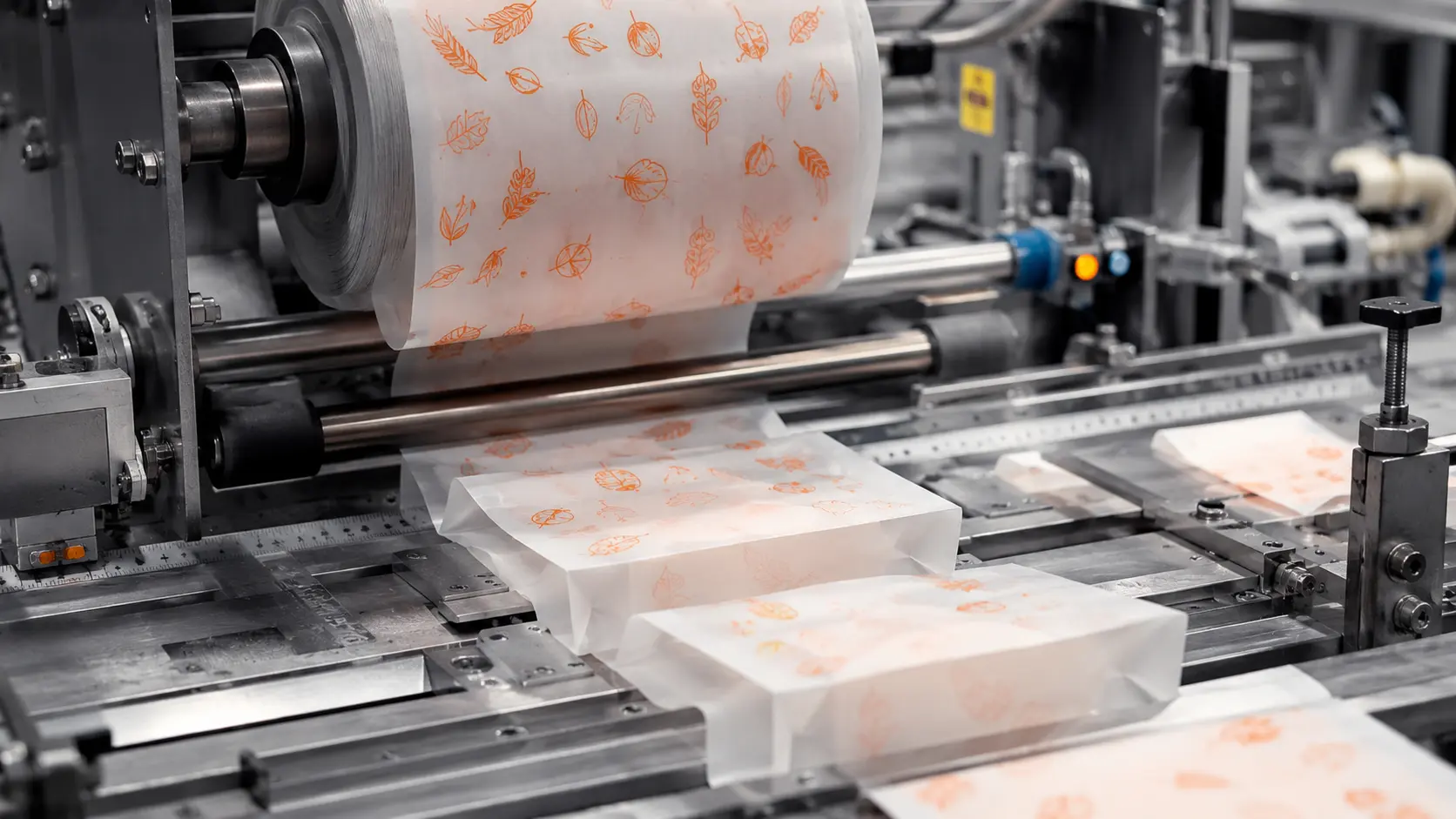
The printed or plain web is slit, folded and side-seam glued, then bottom-sealed or folded according to the design. Cutting registration, fold position, adhesive amount and compression time are controlled continuously. Excess glue can show through the translucent sheet; too little can create a seam that opens during filling. Perforations, windows, flaps or release liners are added only if the approved construction requires them.
6. Test the claimed barrier and conversion performance
Low air permeance, grease resistance and water resistance are different properties. ISO 5636-3:2013 specifies the Bendtsen method for medium-range air permeance of suitable paper and board. It does not by itself prove that a finished bag is leakproof or fit for a particular oily product. Define the relevant material test, seam test, exposure time and acceptance criteria with the supplier.
7. Inspect finished bags and verify documentation
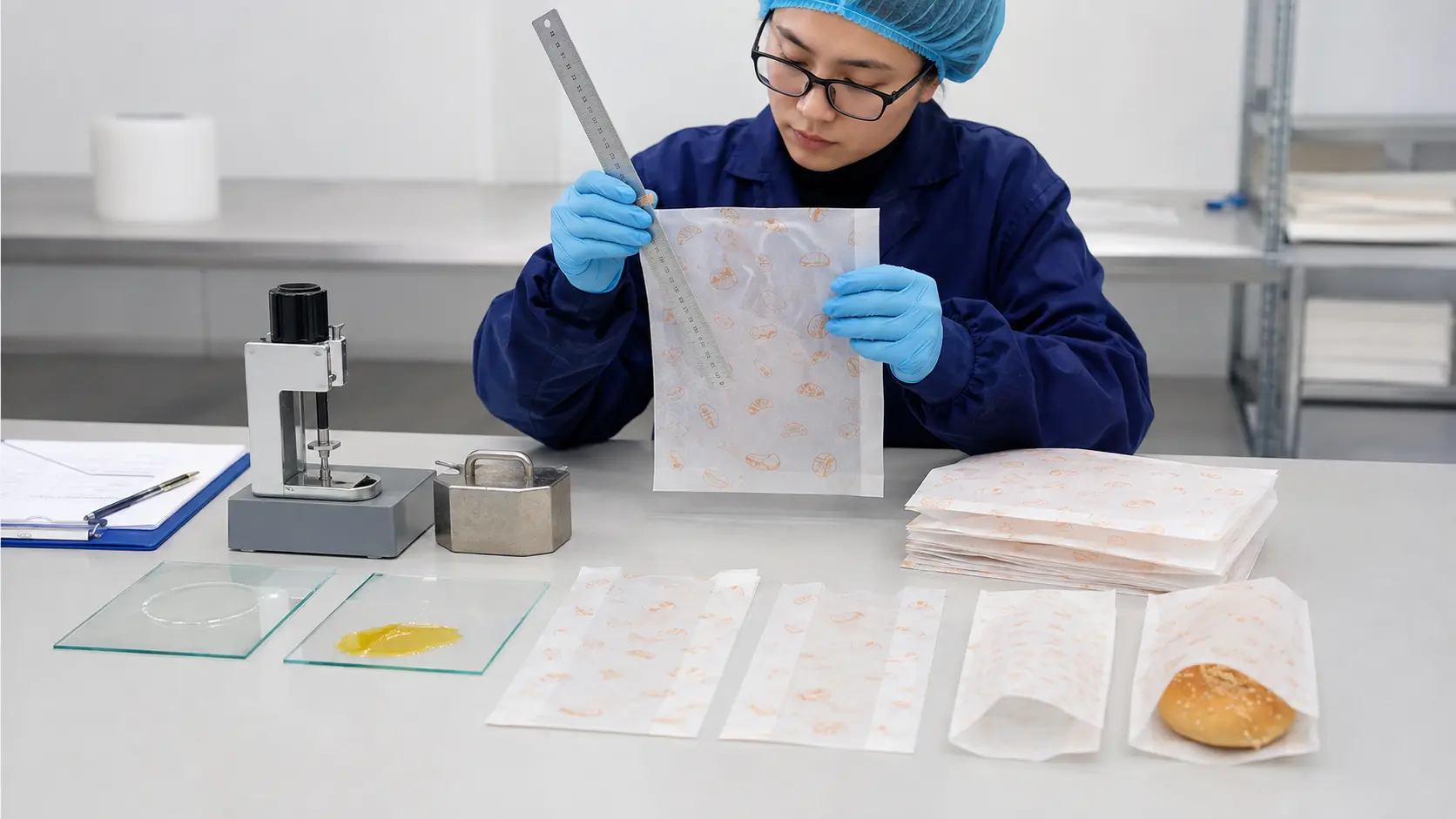
- Finished dimensions, opening and usable product fit
- Paper identity, translucency, shade and surface defects
- Print color, registration, curing and rub resistance
- Side seam, bottom, flap and adhesive cleanliness
- Odor, contamination, packing orientation and quantity
Use an approved production sample and written tolerances. Our packaging quality-control checklist helps organize incoming, in-process and pre-shipment checks.
For food contact, avoid the vague claim “FDA approved paper.” The FDA explains that the regulatory status of a food-contact material is determined by each substance that comprises the article and its intended conditions of use; paper and paperboard components are addressed in 21 CFR Part 176, while adhesives and coatings have their own provisions. Review the official FDA food-contact material guidance and request documentation for the exact paper, ink, adhesive and coating construction.
Conclusion
A reliable glassine bag balances paper appearance, machinability, seam integrity and the real product environment. Share the product, dimensions, closure, artwork, quantity, destination and contact requirements through our sample request page. Approve the bag after filling it with the actual product and storing it under representative conditions.
