
A pouch can look excellent on a screen and still give a packing team trouble. The zipper may sit too close to the top, the gusset may not open cleanly, or product dust may interfere with the seal. Those are not isolated details. They are connected decisions throughout the zipper pouch manufacturing process.
1. Start with the product and filling line
Before selecting film, the converter needs to understand the product, target shelf life, fill weight, particle or powder behavior, filling temperature, packing speed, transport route and consumer opening experience. A dry snack, oily food, cosmetic refill and hardware kit can require very different structures even when their bags look similar.
Bag style is defined at the same stage: stand-up or flat, bottom or side gusset, press-to-close zipper, tear notch, hang hole, window and rounded corners. Our Brazilian snack packaging case study shows how a flexible bag project can be framed around the actual product and market.
2. Engineer the film structure
Flexible packaging often combines layers because one material rarely provides every required property. An outer web may support printing and stiffness, a middle layer may contribute barrier or strength, and the inner sealant layer must contact the product appropriately and seal within the intended operating window. The final construction should be written layer by layer, including thickness, treatment and applicable compliance documentation.
Food-contact note: The finished structure, inks, adhesives and intended conditions matter. Do not assume that a generic resin statement proves suitability for a specific food, temperature or market. Request current declarations and migration or other testing where the applicable rules require it.
3. Prepare and approve the artwork
Prepress places artwork on the repeat layout and checks color, resolution, barcodes, eye marks, zipper clearance, seals, gusset folds and bleed. Many laminates use reverse printing so the ink is viewed through the outer film and protected inside the structure. A proof confirms content and position; a physical color reference controls appearance more reliably than an uncontrolled monitor.
4. Print, laminate and allow the structure to cure
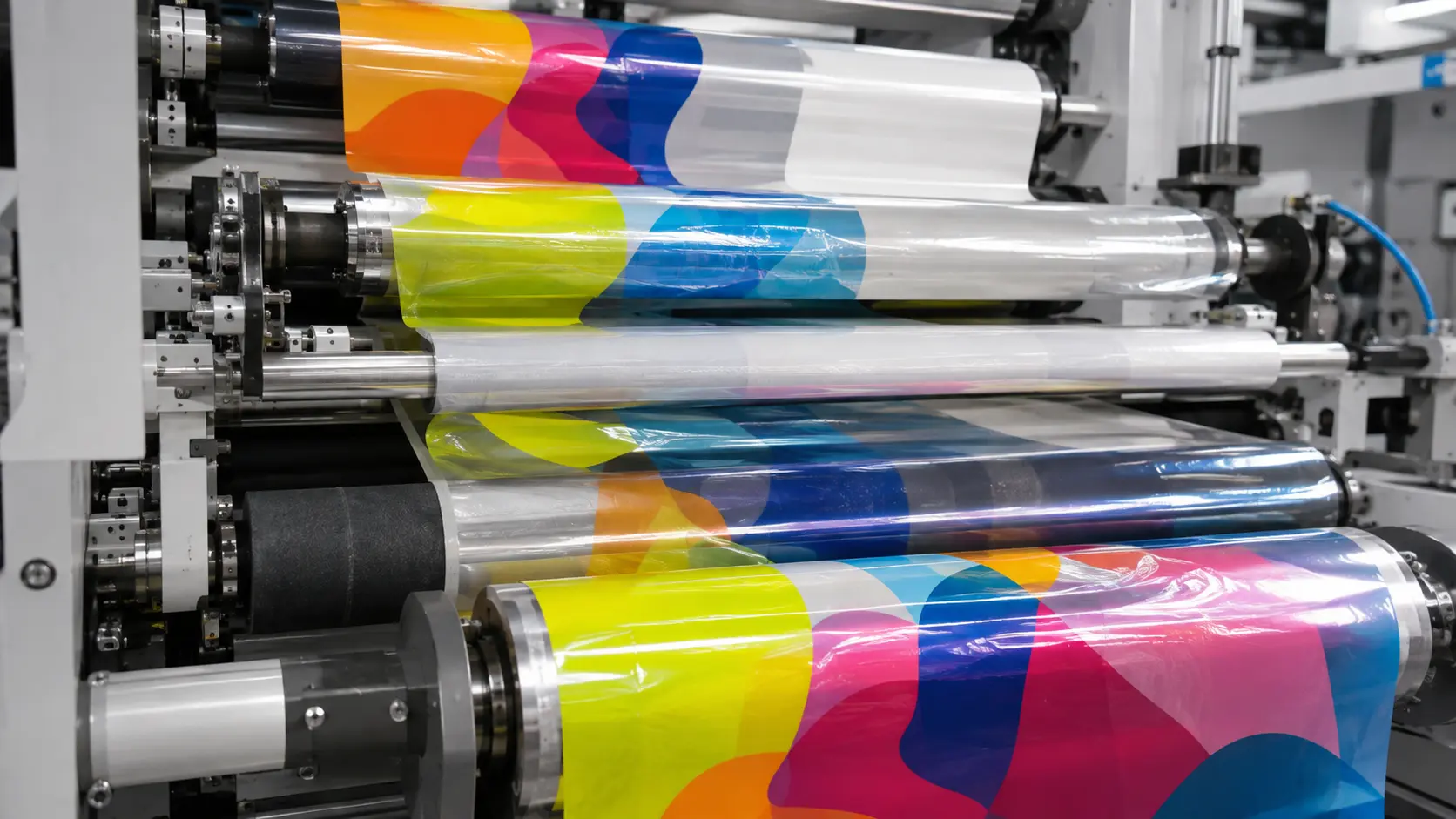
Film is printed roll to roll, with operators monitoring registration, ink coverage, defects and web tension. Printed and functional webs are then combined by the selected lamination process. Adhesive application, tension and nip conditions affect bond uniformity and appearance.
A newly laminated roll may require controlled curing before slitting and pouch making. The correct time and conditions depend on the adhesive system and supplier instructions. Rushing this stage can contribute to bond, odor or residual-solvent concerns, so the production schedule should include the validated curing requirement rather than an assumed universal number.
5. Slit the master roll
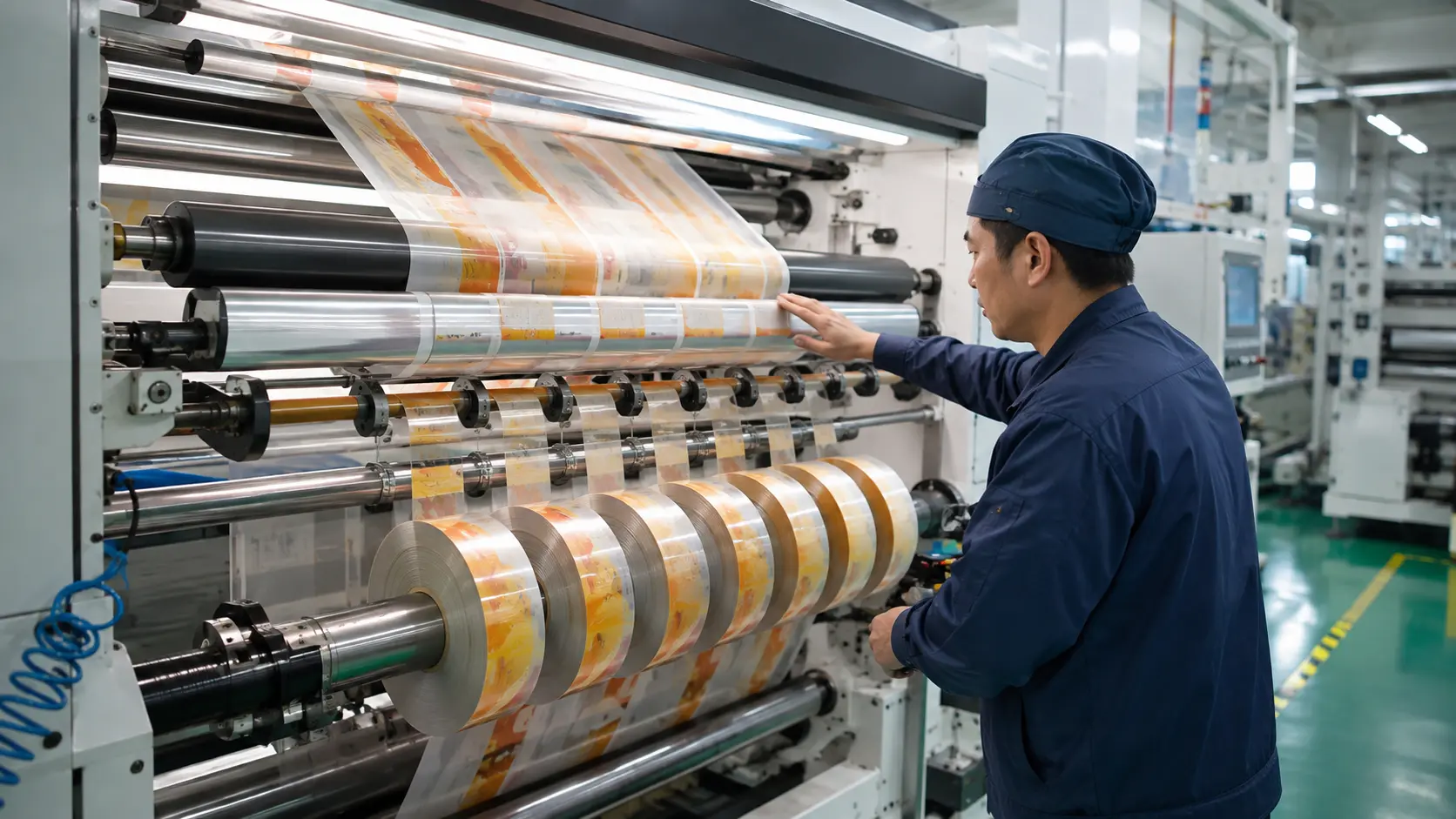
The wide master roll is slit into widths matched to the pouch machine. Roll edges, winding tension, telescoping, splice locations and print repeat are checked. Poor slitting or winding can make the web wander later, moving artwork, zipper or seals away from their intended positions.
6. Form the pouch and insert the zipper
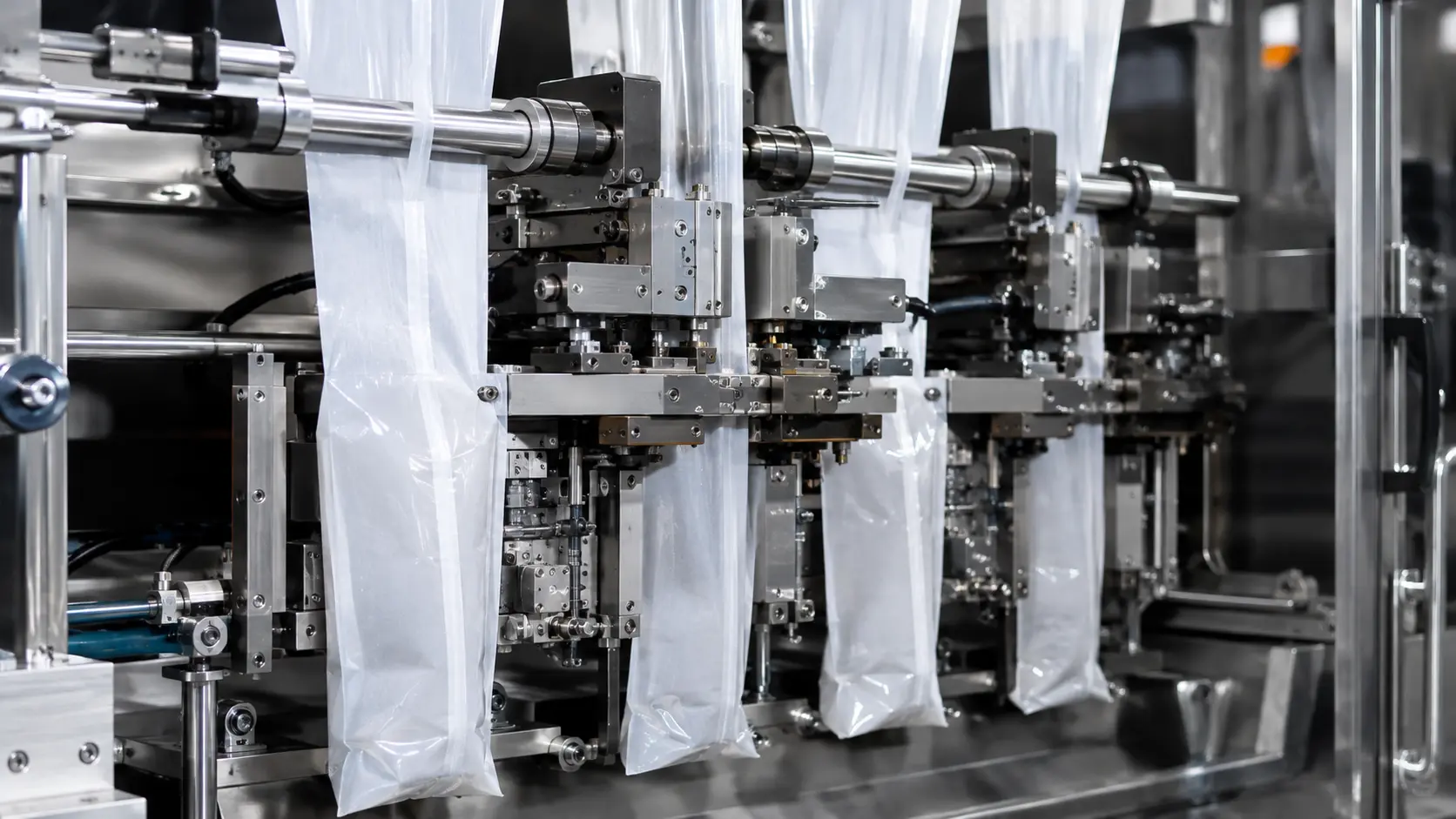
On the pouch-making line, the web is guided, folded and aligned. The zipper profile is introduced at the specified height, gussets are formed, and heated jaws create longitudinal and transverse seals. The machine then cuts individual bags and may add tear notches, hanging holes or corner profiles.
Temperature is only one sealing variable. Pressure, dwell, line speed, jaw condition, material flatness and contamination all affect the result. The zipper-to-side-seal intersections deserve particular attention because several material layers meet there.
7. Inspect seals, dimensions and use experience
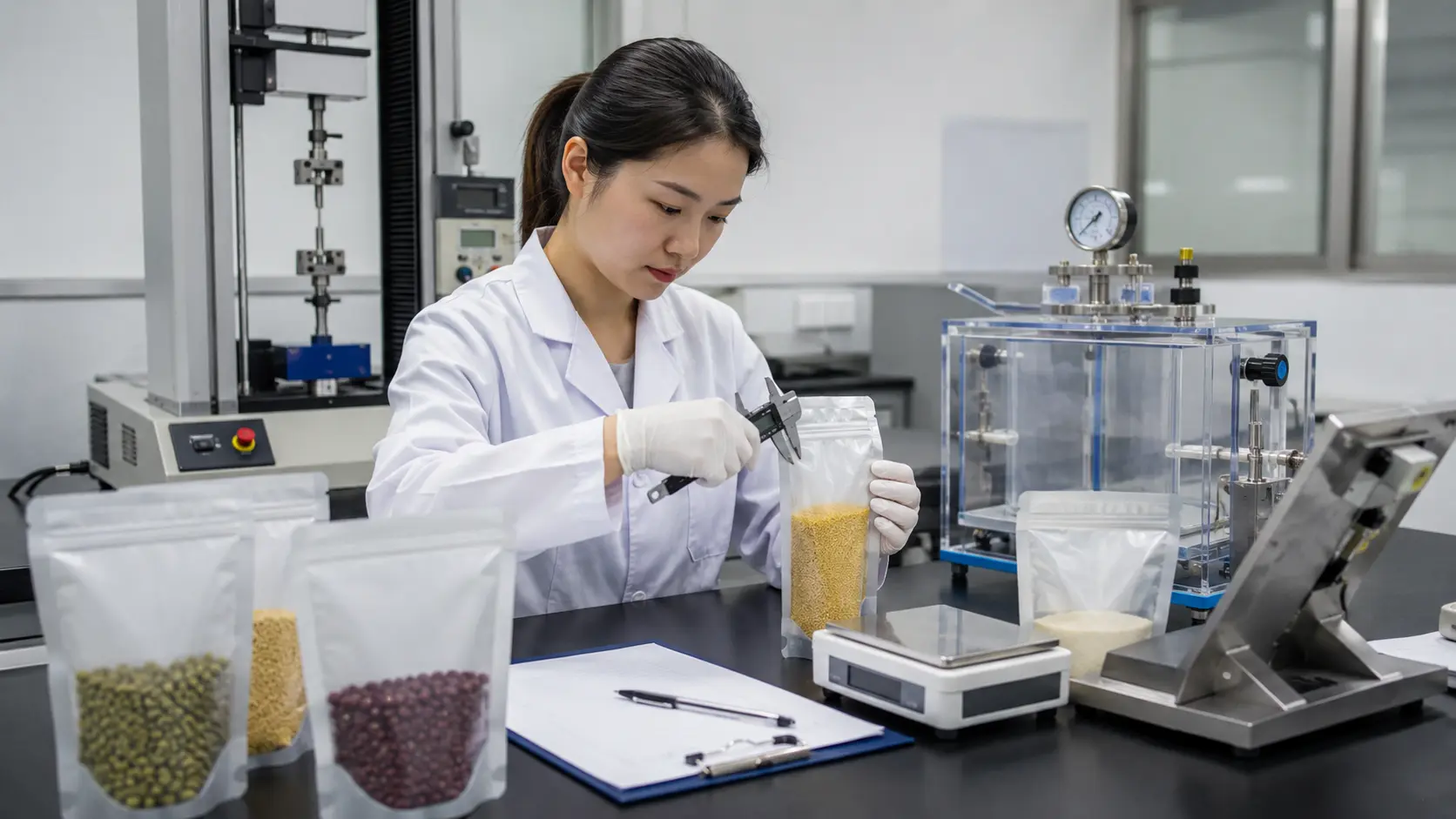
- Finished width, height, gusset, zipper position and seal width
- Print registration, color, scuffs, wrinkles and laminate defects
- Seal continuity, channels, burns, folds and contamination
- Zipper engagement, opening force and repeated closing
- Standing stability, filling access and packed-product fit
- Quantity, odor, cleanliness and shipping-carton protection
Testing must reflect the real product and risk. ASTM F88/F88M covers measurement of seal strength in flexible barrier materials and explains its relevance to process consistency and opening force. ASTM F2096 describes an internal-pressurization bubble method for detecting gross leaks. These are possible methods, not automatic requirements for every pouch; buyer and supplier should agree on the applicable edition, sample preparation and acceptance limits.
What buyers should send for a quote
Provide product description, ingredients or chemical compatibility needs, fill weight, target shelf life, bag dimensions, filling method, temperature conditions, zipper and feature list, artwork, quantity, destination market and test requirements. Use our packaging quality-control checklist to organize approval points, then submit the project through the sample request page.
Conclusion
A dependable zipper pouch is built as a system. Product requirements determine the laminate; the laminate determines printing, curing and sealing conditions; pouch geometry determines how the zipper and gusset behave. Approving a filled production sample under real packing, storage and opening conditions is the best way to connect those decisions before mass production.
