
A cotton pouch usually looks uncomplicated: two panels, a few seams and a cord. Yet a sample can quickly reveal less obvious problems. The product may fit before washing but not after conditioning, the logo may crack when the mouth gathers, or the quoted size may include fabric that disappears into seams. A reliable cotton drawstring bag manufacturing process controls these details before bulk sewing begins.
1. Define the usable bag, not just two dimensions
Start with the product dimensions, weight, surface sensitivity and insertion direction. Finished width and height should be distinguished from usable internal space. Seam allowance, the folded drawcord channel, gathered mouth and any gusset all consume material. A physical fit sample is especially important for rigid boxes, bottles and products with sharp corners.
The intended brand experience also guides the material. Our comparison of velvet and cotton drawstring bags explains when a natural woven surface may be preferable to a pile fabric.
2. Specify and approve the cotton fabric
“100% cotton” is not a complete production specification. Buyers should agree on weave, mass per area, yarn and weave density where relevant, natural or bleached appearance, dye color, finishing, hand feel and acceptable shade range. Lightweight muslin, plain weave and canvas can all produce very different opacity and structure.
Cotton can change dimension when exposed to moisture, heat and finishing processes. If the bag may be washed or if stable dimensions are important, the conditioning or pre-shrink requirement and measurement method should be agreed. Never promise “zero shrinkage” without a defined test and verified result.
3. Inspect incoming fabric and prepare it consistently
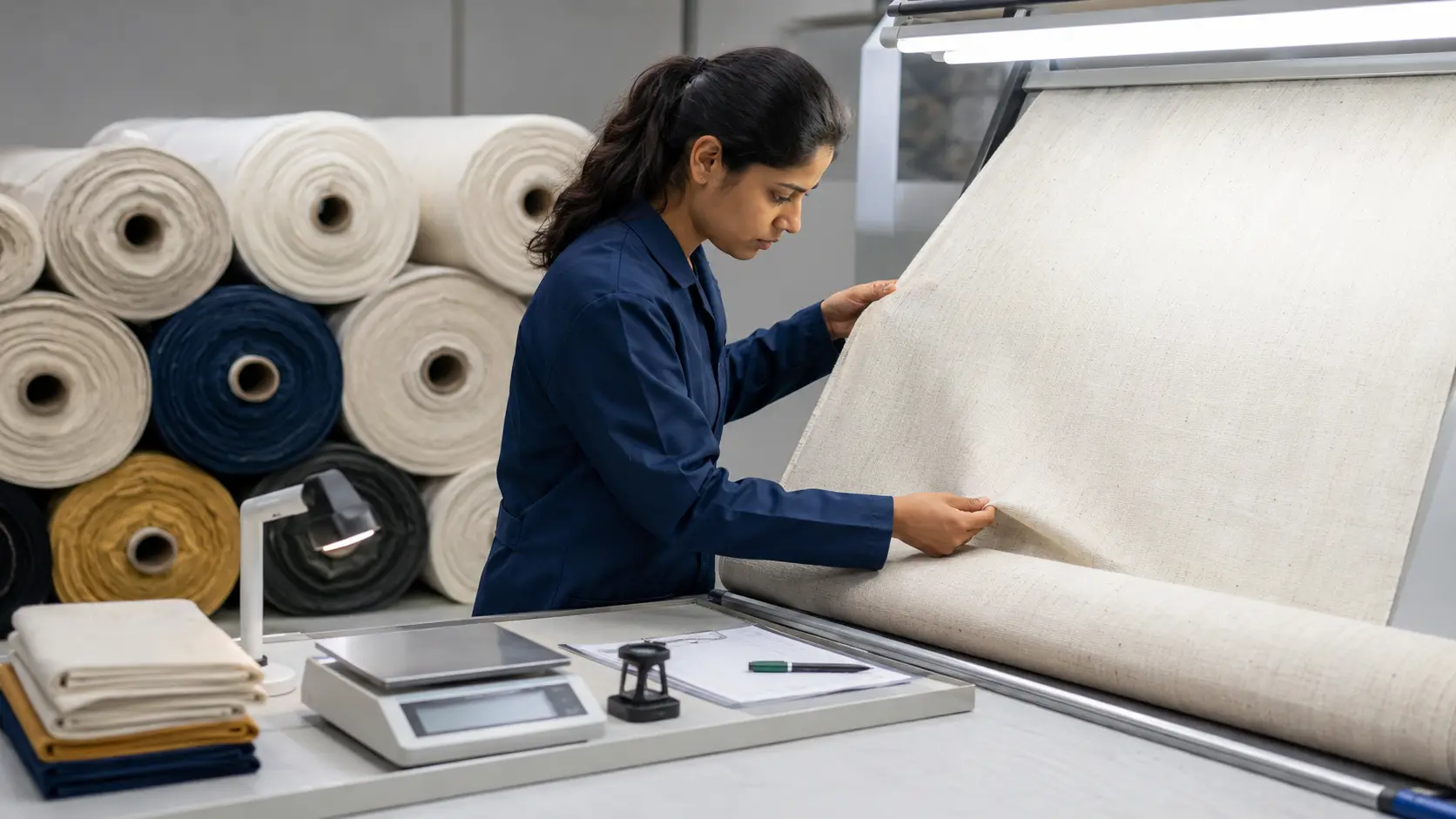
Incoming rolls are checked for identity, width, mass, shade, weave variation, holes, stains, slubs and finishing consistency. Rolls from different dye lots should not be mixed casually within one order. Fabric relaxation, ironing or other preparation must be consistent because tension and moisture can affect cutting dimensions.
4. Print or decorate the flat panels
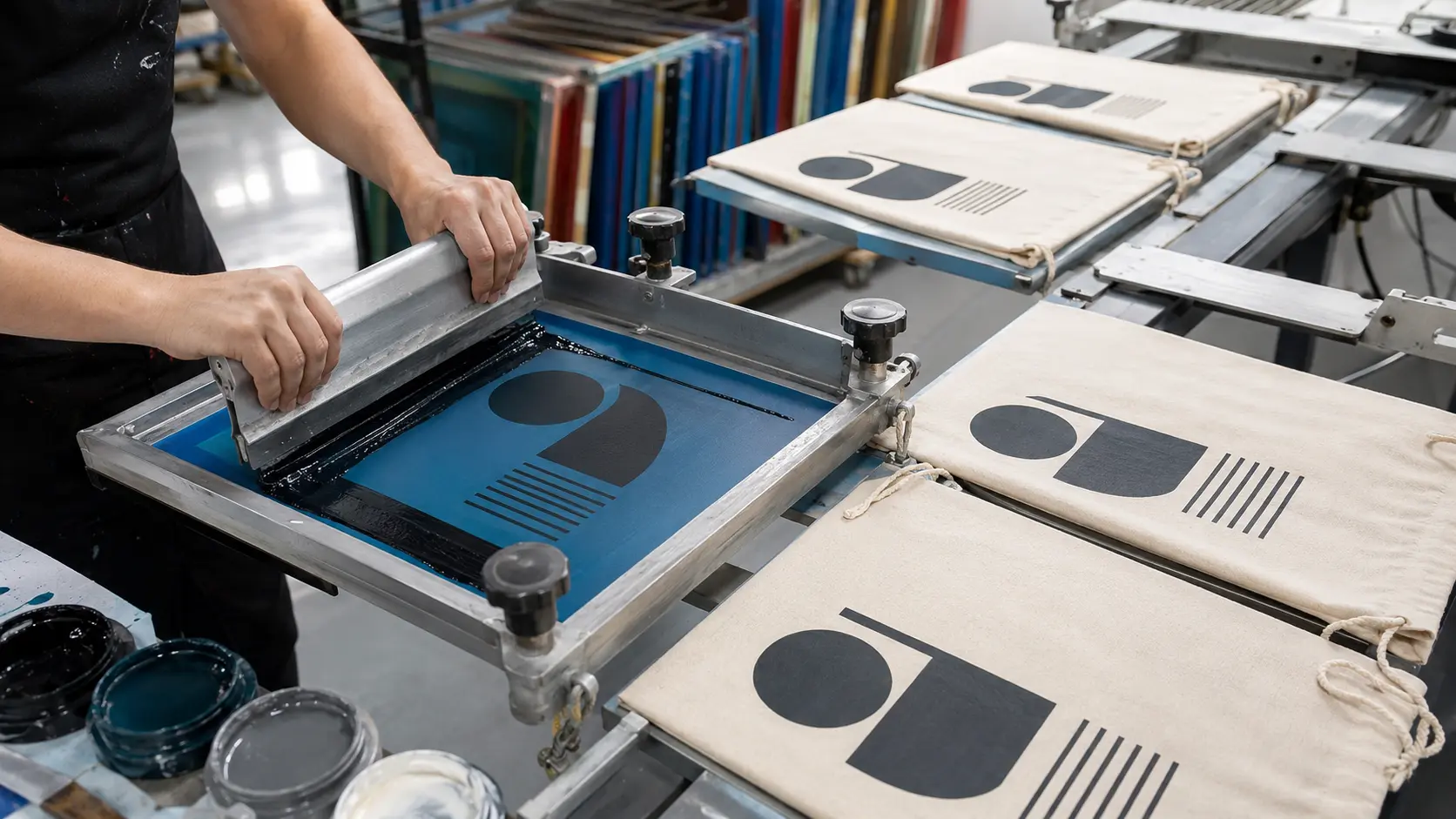
Screen printing is common for solid logos, while transfer, embroidery, woven labels and other methods suit different artwork and quantities. Printing before assembly provides a flat support and predictable registration. The print area should avoid seams and heavily gathered zones unless the distortion is intentional.
Approve color, position, hand feel and adhesion on the actual fabric. Ink behavior can differ between natural, bleached and dyed cotton. If laundering or abrasion matters, define the test conditions rather than approving appearance alone.
5. Cut panels with grain and pattern under control
Fabric is spread and cut into panels, gussets, linings and reinforcement pieces. Grain direction, layer alignment and pattern placement are controlled to reduce twisting and size variation. Efficient nesting can reduce waste, but pieces should not be rotated in ways that change appearance or behavior unless the specification allows it.
6. Sew the body and drawcord channel
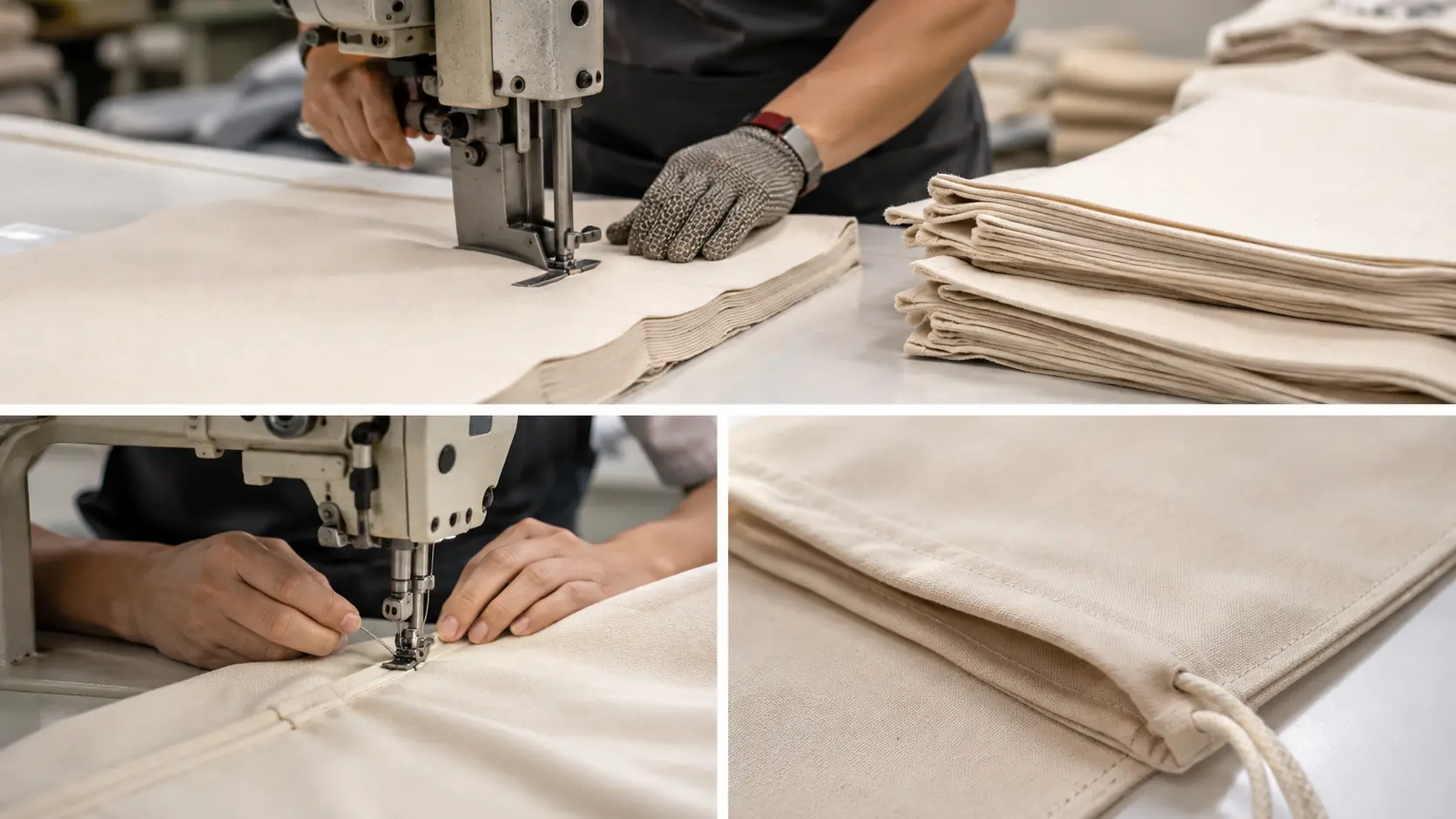
Operators form the mouth channel, sew side and bottom seams, add gussets or lining and finish raw edges. Stitch type, seam allowance, stitch density, thread and reinforcement should match the load and fabric. ASTM lists D1683/D1683M for failure in sewn seams of woven fabrics; whether it is appropriate depends on the product specification and agreed test plan.
7. Insert the cord and finish the bag
Cotton cord, polyester cord, ribbon or another material is threaded through a single- or double-draw channel. Cord diameter must suit the tunnel and eyelets; too much friction makes the pouch unpleasant to close, while an undersized cord can feel weak or slip through openings. Ends may be knotted, tipped or fitted with stoppers.
8. Inspect the complete pouch
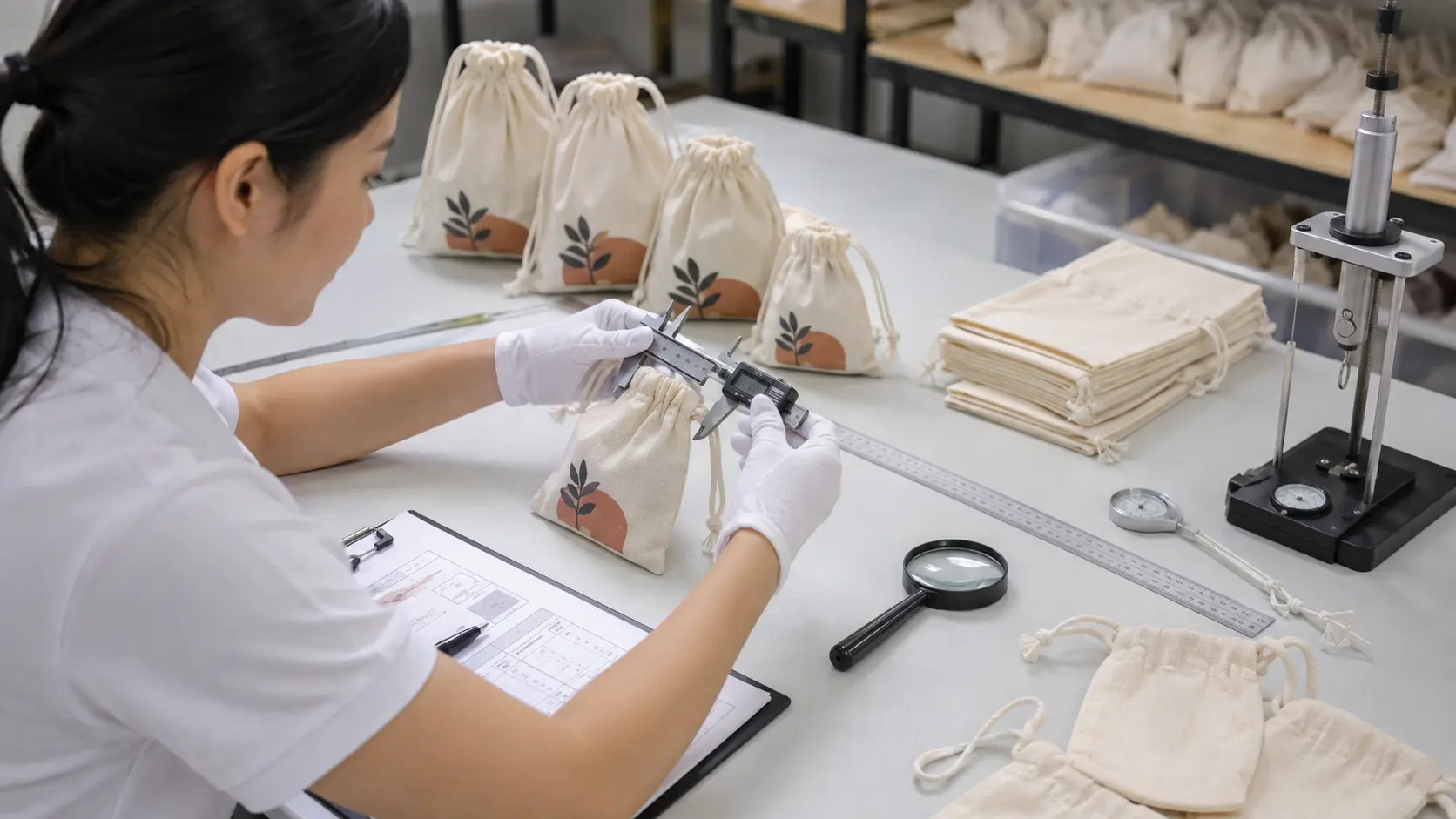
- Finished dimensions and usable fit with the real product
- Fabric identity, shade, weave and visible defects
- Logo size, position, color, adhesion and distortion
- Seam position, stitches, loose threads and raw-edge control
- Cord length, symmetry, movement and knot security
- Odor, cleanliness, packing quantity and moisture protection
Use an approved production sample and written tolerances. Our packaging quality-control checklist helps connect material approval, in-process checks and pre-shipment inspection.
Use certification claims precisely
OEKO-TEX STANDARD 100 is a label for textiles tested for harmful substances; it is not an organic-cotton certificate. GOTS states that reference to GOTS labeling requires the applicable certification and approval, and that the supply chain through sewing, packing and labeling is relevant. Review the official GOTS labeling requirements before making a claim. A certified fabric alone does not automatically make an uncertified finished bag eligible for the product label.
Conclusion
A well-made cotton pouch begins with usable dimensions and a complete fabric specification, then controls preparation, decoration, cutting, seams and cord movement. Share the product, target size, fabric, artwork, quantity, destination market and certification needs through our sample request page. Approve the bag with the real product before mass production.
