
A paper tube can feel reassuringly solid in the hand, but that clean cylinder is the result of several interacting decisions. Board build, adhesive, winding tension, drying, cutting and lid clearance all influence whether the final pack feels precise or frustrating. This guide follows the paper tube packaging manufacturing process and highlights what an international buyer should approve before volume production.
1. Start with the product and opening experience
The product determines the tube, not the other way around. Share the product dimensions, weight, insertion direction, fragility and any inner bag, tray or cushioning. Define the usable internal diameter and depth separately from the advertised outer dimensions. A rolled poster needs different clearance from a glass jar, and a friction-fit cosmetic tube needs a different opening force from a shipping tube.
Choose the construction at this stage: a one-piece tube with plugs, a two-piece shoulder-and-lid tube, or a telescoping format. If you are also comparing rectangular structures, our guide to custom paper box manufacturing explains the different converting sequence.
2. Specify every material layer
A rigid wall is normally built from several paperboard plies rather than one unusually thick sheet. The specification should identify the body board, inner liner, outer wrap, adhesive, shoulder material and end components. Agree on finished wall thickness, moisture condition, odor requirement, visible paper color and recycled or certified content claims. Decorative options may include printed paper, textured specialty stock, foil, embossing or a label.
3. Inspect and condition incoming materials
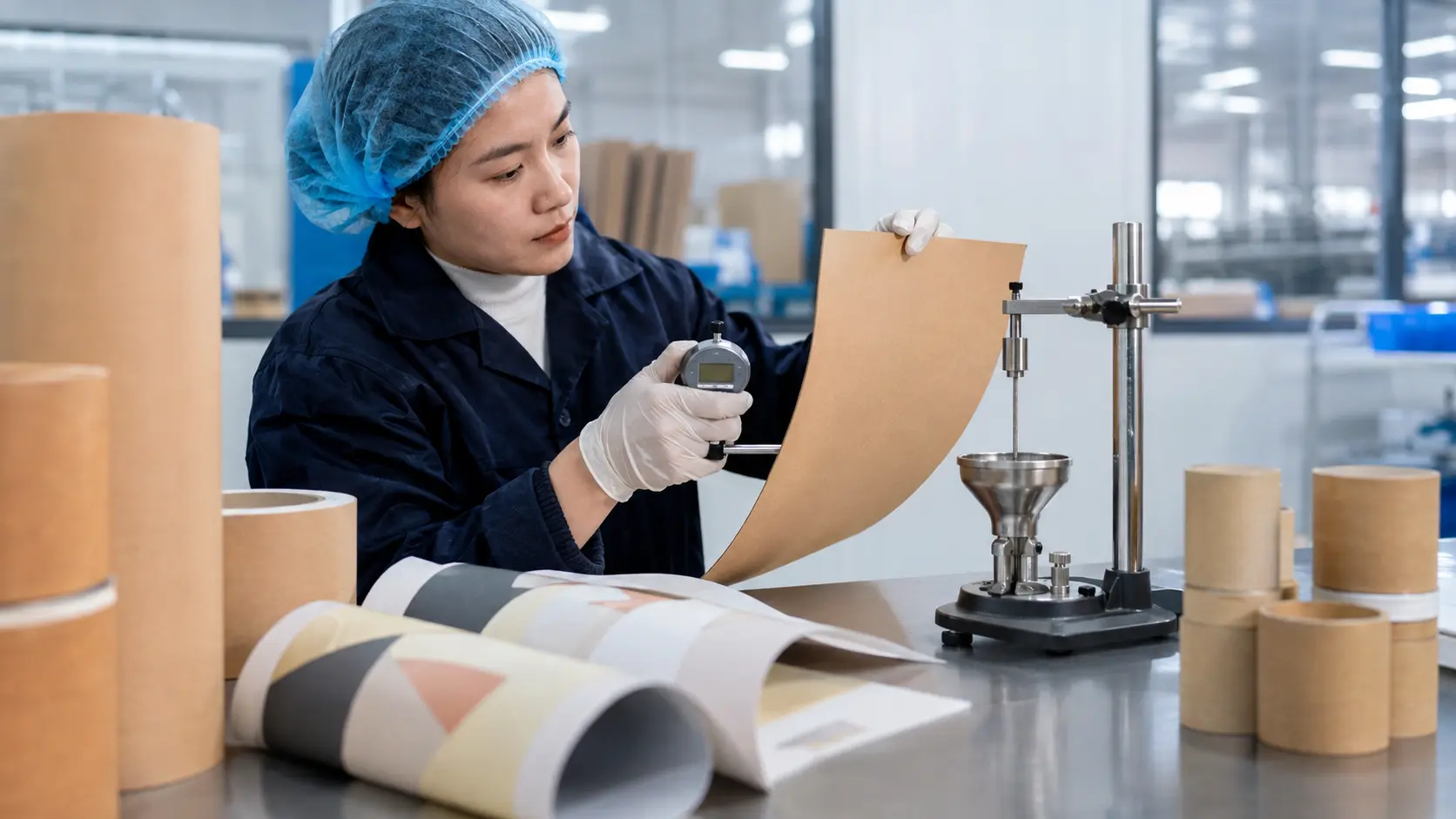
The factory checks roll identity, width, caliper, surface damage, shade and moisture-related variation. Printed wraps are compared with the approved color standard, while adhesives are controlled according to the supplier’s storage and preparation instructions. Paper moves with humidity, so materials and freshly wound bodies need a consistent environment before precise cutting and fitting.
4. Wind the structural body
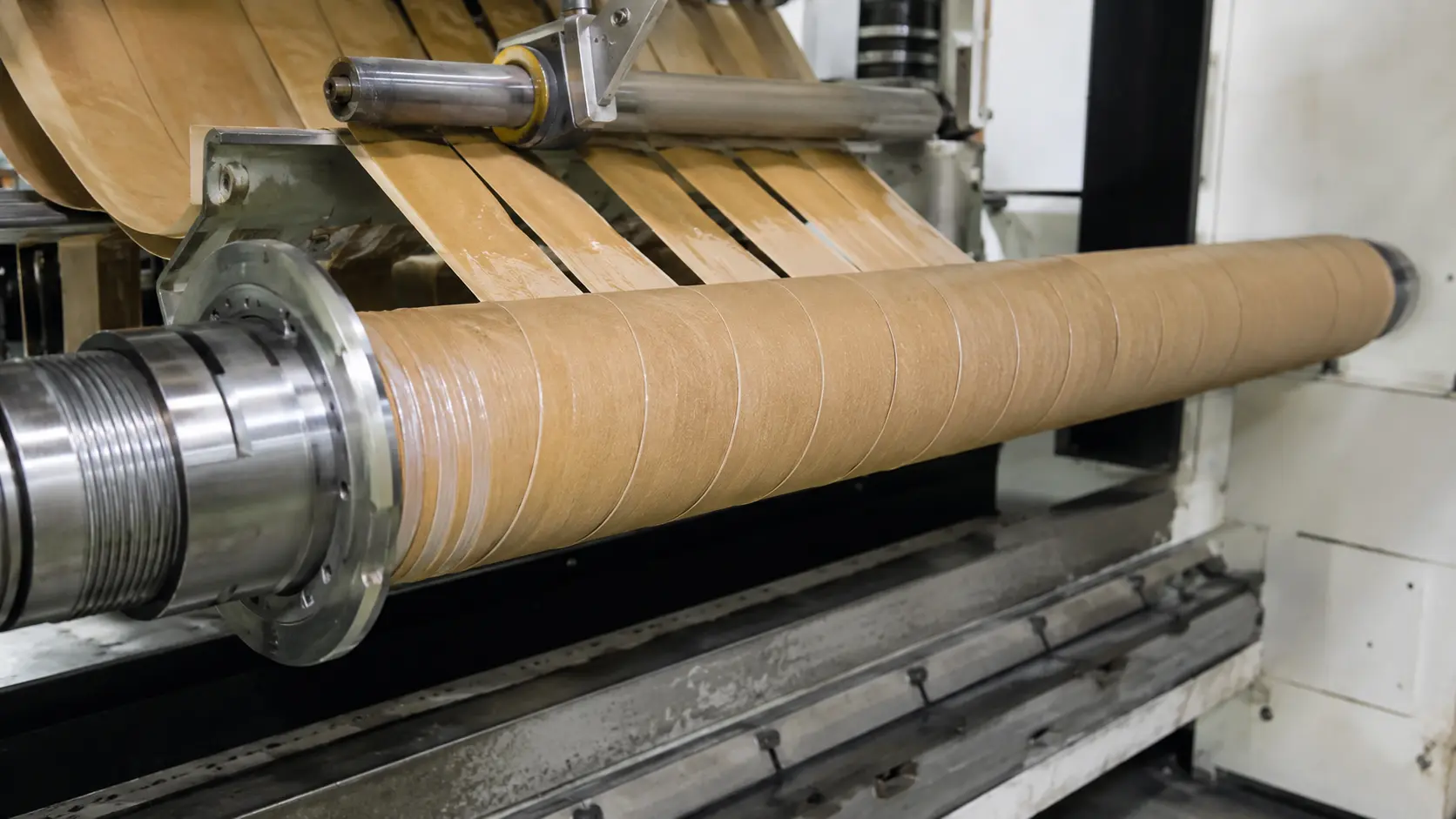
During spiral winding, narrow paper plies receive adhesive and wrap around a mandrel at controlled angles. Ply overlap, tension and adhesive application must remain stable; otherwise the tube may bow, delaminate or vary in diameter. Some structures use convolute winding, where sheets wrap around the mandrel without a spiral seam. The right method depends on size, appearance, equipment and performance requirements.
5. Dry, stabilize and cut accurately
The continuous body is allowed to set before precision cutting. Cutting too early can deform a wet structure; a dull or poorly aligned blade can leave a crushed or fuzzy edge. The factory controls finished height, squareness, roundness and edge quality, then removes dust that could become trapped beneath a wrap or inside a food, cosmetic or gift pack.
6. Apply the printed wrap and assemble the ends

Outer wraps are cut, glued and rolled onto the body with attention to artwork orientation, seam position and top-to-bottom registration. Next, the operator fits the shoulder, lid, paper or metal end, or molded insert specified for the design. Small diameter changes can make a lid too loose or create excessive opening resistance, so the complete lid-and-body combination must be judged after the materials have stabilized.
7. Inspect the finished tube as a system
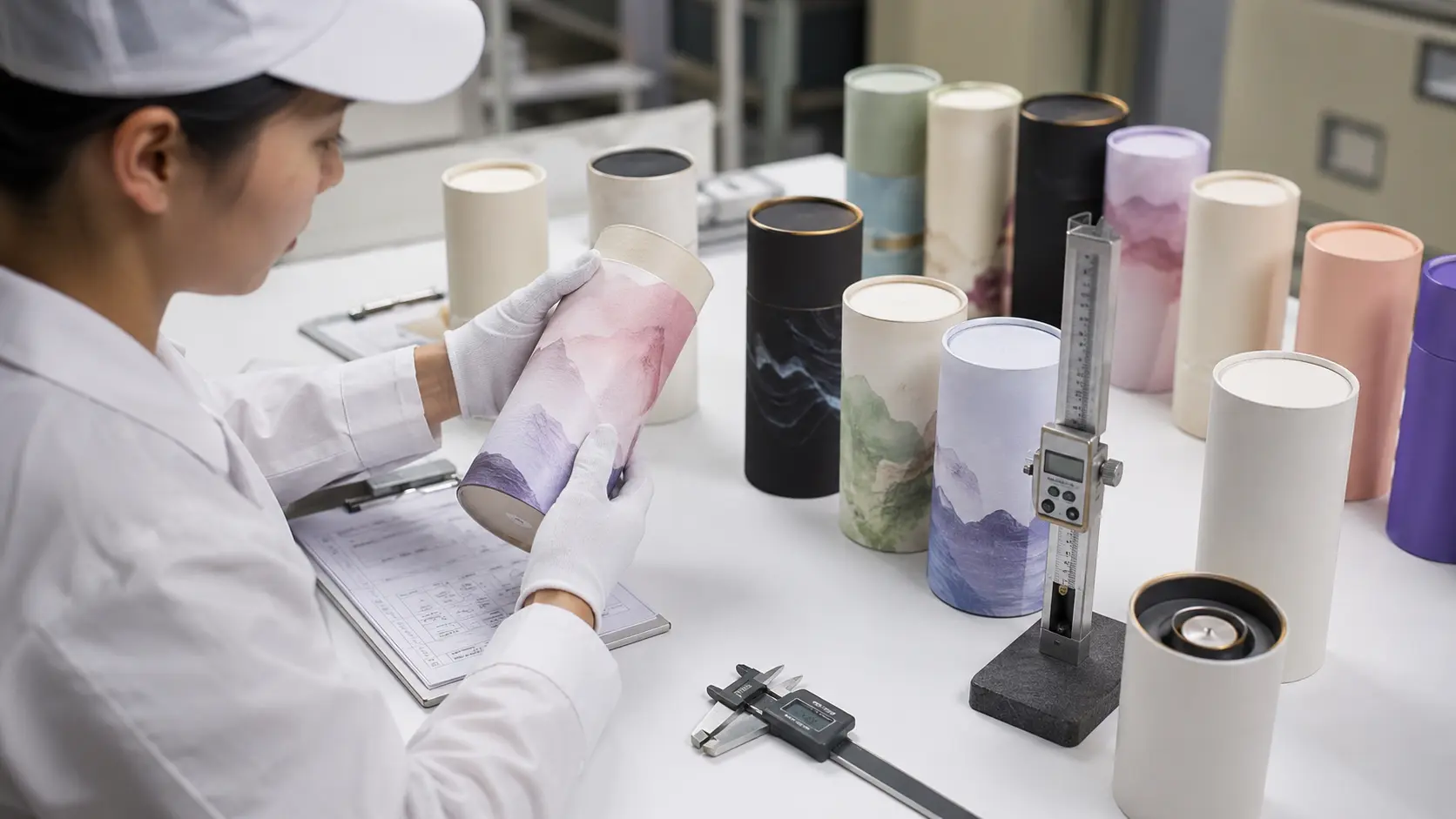
- Internal diameter, usable depth, wall thickness and product fit
- Roundness, straightness, edge condition and visible cleanliness
- Lid engagement, opening feel and repeated closing
- Artwork color, orientation, wrap seam and surface defects
- Adhesion, odor, accessory placement and packing quantity
A tube that looks perfect when empty can still fail with the real product or in its shipping carton. Use an approved production sample, written tolerances and a defined inspection level. Our packaging quality-control checklist provides a practical framework.
8. Match testing and claims to the real use
If the paper tube and its transport carton must withstand stacking, agree on the packed configuration and test plan. ISO 12048:1994 specifies compression and stacking test methods for complete, filled transport packages; it is not a universal pass/fail value for every paper tube. The buyer and supplier must define the load, conditioning, duration and acceptance criteria appropriate to the distribution route.
Use environmental labels with the same precision. FSC explains that an FSC label on a finished product depends on chain-of-custody requirements being met through the supply chain. Buying certified board alone does not automatically authorize a finished-pack claim. Review the official FSC chain-of-custody guidance before artwork approval.
Conclusion
Reliable custom paper tubes begin with the product, a complete layer specification and a realistic opening experience. Winding, drying, cutting, wrapping and lid fitting then need to be controlled as one process. Send your product dimensions, target quantity, artwork, destination and performance requirements through our sample request page, and approve the final pack with the actual product before mass production.
